Health insights & articles from KDSG
May 09, 2026
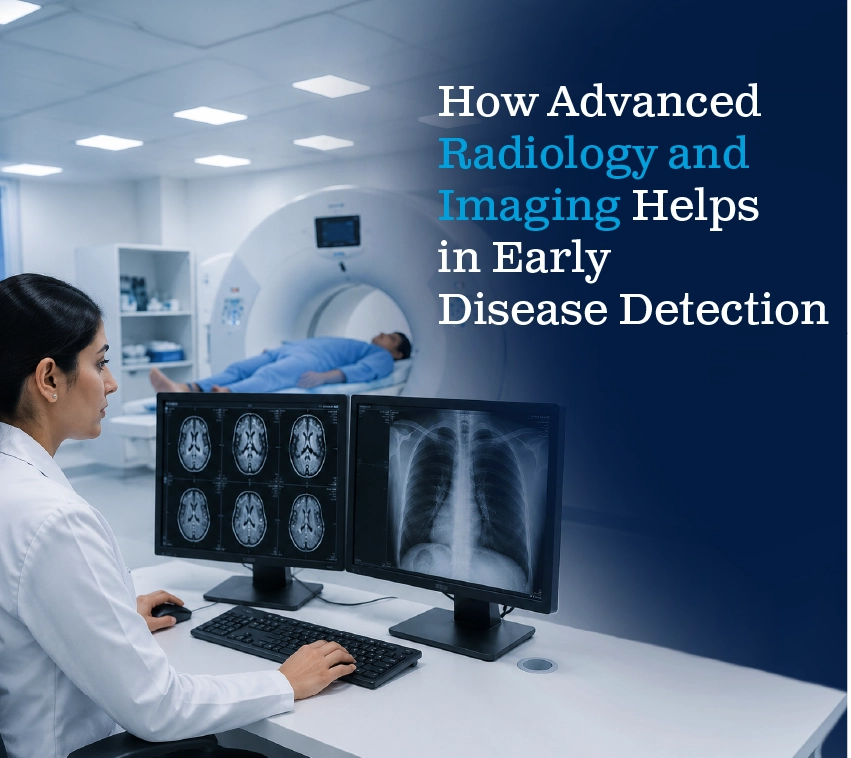
Many conditions are said to begin quietly. They start to grow inside the body without any proper signs. By the time symptoms start to appear, the condition becomes severe. For such situations, advanced radiology and imaging become extremely essential. Such technologies enable physicians to look inside an individual’s body without any surgery. They can help in detecting issues at an early stage. From heart conditions to cancer, early detection can easily change the results completely. It can also lower the complications and enhance recovery. These days in healthcare, imaging is no longer a support tool. It has become the main part of prevention and diagnosis. It is important to understand how it can help patients take proper control of their health and opt for timely care.
Early detection can make a massive difference in treatment. When diseases are detected early, it leads to the following:
Treatment starts sooner
Survival possibility improves
Recovery becomes a lot easier
Complications are reduced
Many of the conditions are said to develop slowly without any symptoms. Imaging can help detect such hidden issues before they become severe.
Imaging can pinpoint conditions in the following manner:
Advanced imaging can detect small changes inside the body. These changes may not cause symptoms at first.
For example:
Tiny tumours can be seen before they grow
Early heart blockages can be detected
Minor bone loss can be identified
This early insight allows doctors to act quickly.
Many diseases show no signs in the early stage. Imaging can reveal:
Early-stage cancer
Silent infections
Internal injuries
This gives patients a chance to start treatment before the disease progresses.
Modern-day imaging offers well-detailed and clear pictures. This can help physicians with the following:
Detecting the exact issue
Understand the severity of the condition
Avoid all the guesswork
Good accuracy can lead to much better treatment decisions.
Imaging plays an important part in various diseases. Here is how it can help:
Imaging can help detect cancer at an early stage. It helps in the following:
Identifying tumours before the symptoms
Planning treatment
Detecting the location and size of the treatment
Early cancer detection can lead to much better survival rates.
Heart-related issues usually develop silently. Imaging can help pinpoint:
Structural heart problems
Blood clots
Blocked arteries
Early diagnosis can help prevent strokes and heart attacks
Conditions, such as brain tumours or stroke, need diagnosis immediately. Imaging tools, such as CT scans and MRI, can help:
Guide emergency treatment
Detect neurological conditions
Identify brain-related injuries
Immediate action can save lives and prevent long-term damage from taking place.
Imaging can also help in joint and bone disorders. It can detect the following:
Ligament injuries
Arthritis
Fracturers
Early diagnosis enables quick recovery and proper treatment.
CT scans and ultrasound can help detect the following:
Gallbladder issues
Kidney stones
Liver issues
Such ailments can be treated easily when the condition is detected early.
Advanced imaging and radiology provide many unique advantages. Here are some of the primary ones:
Better Treatment Outcomes: Early detection improves the success of treatment. Patients often need less aggressive care.
Reduced Need for Surgery: Clear imaging helps doctors make better decisions. This can reduce unnecessary procedures.
Faster Diagnosis: Advanced machines provide quick results. This helps start treatment without delay.
Lower Healthcare Costs: Treating a disease early is often less expensive than treating advanced conditions.
Improved Patient Confidence: Patients feel more confident when they understand their health condition clearly. Imaging provides that clarity.
Advanced imaging and radiology have completely transformed the way health conditions are treated and detected. They enable physicians to see inside the body with precision and clarity. It can also help spot issues at an early phase, usually before the symptoms appear. Early detection can help improve the treatment results, support proper recovery and lower complications. It can also help patients make informed judgments about their health. Hospitals, such as KDSG, offer advanced radiology and imaging in Noida and modern-day diagnosis. Such services are offered by trained specialists. Their methods support proper diagnosis, on-time treatment and also patient-centred care. The hospital combines medical expertise with technology, which enables it to assist patients in detecting issues early and move towards much better health with confidence.
Can imaging tests be repeated frequently without risk?
The frequency depends heavily on the medical need and type of test. The physician’s guide is based on safety.
Do imaging tests require special preparation?
Many of the tests might need fasting or avoiding certain medications beforehand.
Are imaging results always accurate?
The outcomes are highly reliable but, at times, need a lot more tests for confirmation.
Can children undergo advanced imaging safely?
Yes. However, physicians pick the methods properly to ensure safety.