Health insights & articles from KDSG
May 01, 2026
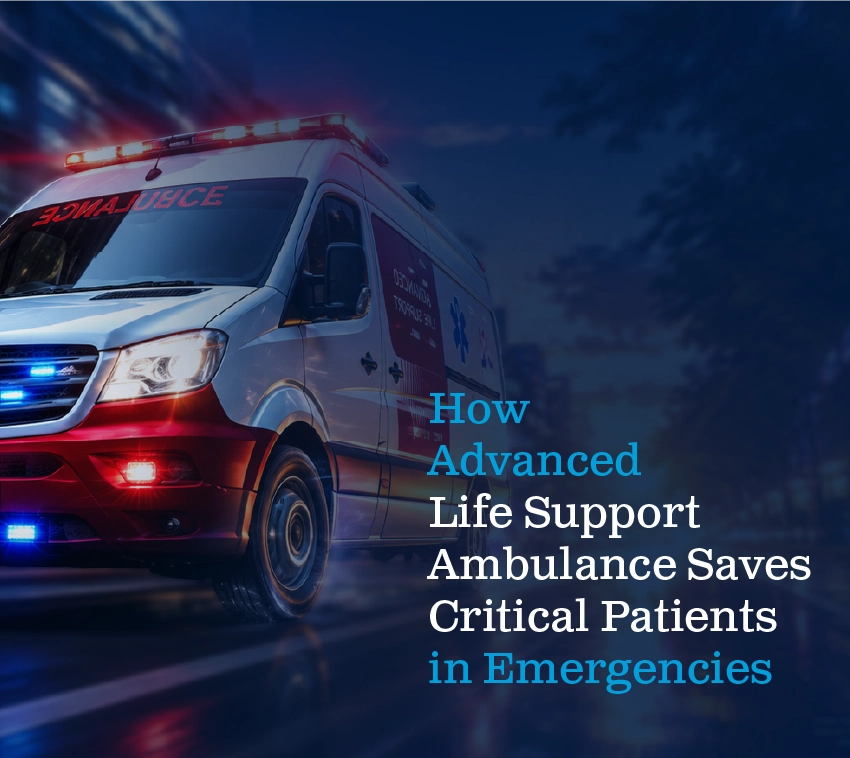
During emergencies, every second counts. A delay, even for a few minutes, can change the outcomes for the patient. This is where an advanced life support ambulance becomes necessary. This is not just a vehicle. It plays the part of a moving emergency space on the wheels. It brings skilled experts along with life-saving equipment to the patient. From severe accidents to heart attacks, these ambulances can offer instant care right before reaching the hospital. Understanding how they function can help you witness their actual value. They can bridge the gap between the hospital and the accident site, usually making the difference between life and death.
The ALS Ambulances are said to function in the following manner during emergencies:
The first step in saving a person’s life is reaching them quickly. These ambulances are created for instant responses. Once they arrive, they do the following:
Stabilises the vital signs before transport.
Starts the treatment immediately on the spot.
The medical team assesses the patient.
The early action can usually prevent the condition from becoming much worse.
The ALS ambulances consist of advanced tools that can treat patients immediately. It includes the following:
Suction devices to clear the airways.
Ventilators to support breathing.
Defibrillators to restart the heart.
Oxygen systems that can enhance the oxygen levels.
Paramedics are said to use these tools to handle all life-threatening ailments. To understand this well, here are some examples:
During cardiac arrest, the defibrillator can easily store the heart rhythm.
In breathing failure, the ventilator helps support the lungs.
All these actions are essential in the first several minutes.
Breathing-related issues are very common during emergencies. ALS experts are highly skilled to do the following:
Ensure the oxygen reaches the lungs.
Utilises advanced airway devices
Inserts the breathing tubes.
They can even conduct procedures, such as tracheal intubation, when it is needed. This can keep the patient completely stable till hospital care begins.
Monitoring is necessary during emergencies. ALS ambulances take the help of advanced monitors to track down:
Cardiac rhythm
Oxygen levels
Blood pressure
Heart rate
Devices, such as ECG machines, can deliver detailed information. This can help the medical experts to make accurate and quick decisions.
Equipment alone cannot save lives. Skilled professionals are equally important. ALS ambulances are staffed by:
Paramedics
Emergency medical technicians
These professionals are trained to handle complex situations. They can perform advanced procedures and make quick decisions under pressure. Their expertise ensures proper care during transport.
Transporting a critical patient is not just about speed. It must also be safe. ALS ambulances are designed to:
Provide space for treatment
Keep equipment within easy reach
Maintain patient stability during movement
Stretchers, immobilisation tools, and monitoring devices help ensure safe travel.
Here are some of the emergencies where these ambulances can help save lives:
In heart attacks or cardiac arrest, quick action is vital. ALS ambulances provide:
Defibrillation
Cardiac monitoring
Emergency drugs
Severe injuries need immediate care. ALS teams:
Control bleeding
Stabilise fractures
Support breathing
Patients with breathing problems need urgent help. ALS ambulances offer:
Oxygen therapy
Ventilator support
Airway management
Time is critical in stroke cases. Early care helps reduce damage and improve recovery chances.
ALS ambulances also transfer patients between hospitals. They provide continuous care during the journey.
The advanced life support ambulances are said to play a vital part in saving lives during emergencies. They also offer instant care, ensure safe transport to the hospitals and stabilise the patient. Equipped with skilled specialists and modern-day technology, they act as the lifeline when time is very limited. Their presence can certainly change the outcomes within minutes. Healthcare providers, such as KDSG, keep the focus on offering on-time emergency care along with trained teams and proper facilities. Their method highlights the significance of immediate response and patient-centred treatment. During critical situations, this ambulance service hospital provides access to advanced ambulance services that can make all the difference. This can turn a moment of crisis into a possibility for recovery.
1. Can ALS ambulances handle newborn emergencies?
Yes. Some ALS units are equipped with neonatal care support and trained staff.
2. Are ALS ambulances available for long-distance transfers?
Yes. They are often used for critical patient transfers between cities or hospitals.
3. Do ALS ambulances operate 24/7?
Most advanced ambulance services are available round the clock for emergencies.
4. Can family members travel inside an ALS ambulance?
Usually, one attendant is allowed, depending on space and patient condition.